
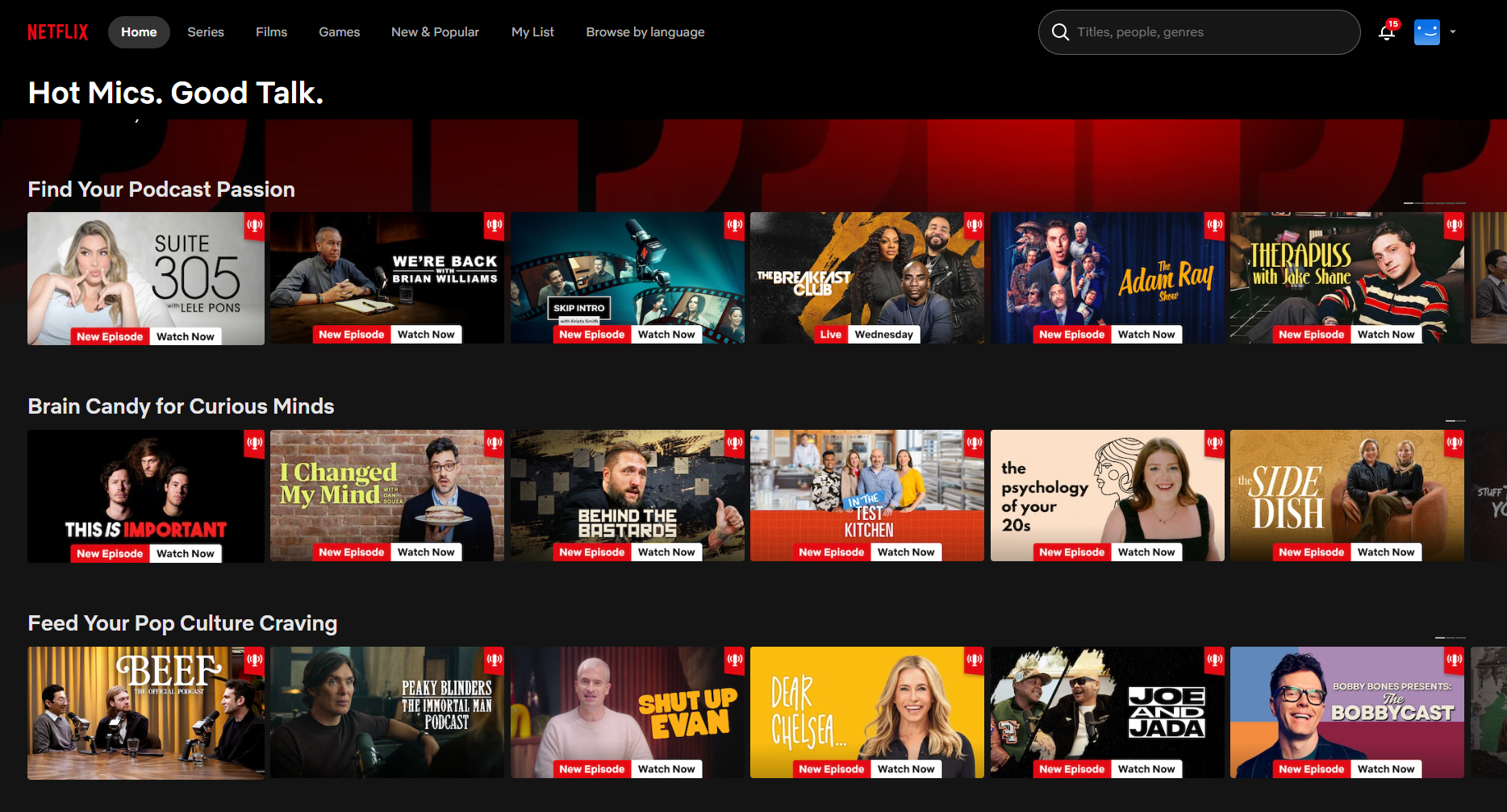
As mentioned in Podnews today, there have been a few stories about whether podcasts on Netflix are actually doing the business for the streamer.
This is a subject that I’m very interested in, and covered a little in my recent Signals in the Static presentation at The Podcast Show. In essence, my argument was that because there is very little crossover between UK and US podcasts, to make this work, Netflix would need to invest in podcasts in each market they are active in. The Bill Simmons Podcast is never going to do much business in the UK since it covers US sport, and it’s notable that even The Rest is Football which is on Netflix during the World Cup, is most likely to appeal to UK viewers given the talent involved, but also the focus of the podcast – headlining with England (and Scotland) coverage, rather than the USMNT.
Matt Belloni at Puck said this in last Friday’s What I’m Hearing Newsletter ($) in a piece examining Netflix’s recent performance:
To date, no video podcast has charted on Nielsen’s weekly top 10, which Netflix tends to dominate, and multiple company sources have told me that the podcast engagement numbers on the whole are low.
That’s true, but that doesn’t mean that podcasting isn’t working for them. For Netflix, this is surely about the cumulative performance of a whole bunch of podcasts, not getting a breakout hit from one specific title. To my mind, it’s not how The Bill Simmons Podcast or The Breakfast Club do individually – but how they contribute in total to Netflix’s consumption.
The reason that Netflix signed up with podcast companies is to keep viewers coming back to the platform day after day, week after week. Yes, Netflix has more shows and films dropping regularly than any other streaming service, but it still relies on its big hits like Bridgerton and until recently, Stranger Things. And with a new importance placed on advertising revenues, it need to increase its hours of consumption. Video podcasts allow that happen very affordably – at least compared with shows that cost tens of millions of dollars an hour to produce.
Podnews lays out some other stats about podcast consumption on the platform with Edison Research reporting that 14% of podcast consumers in the US having used Netflix to consume podcasts. But those 14% will have been spread across a variety of titles.
In the UK, the podcast offering has been thin so far. I’ve no doubt that everyone is paying close attention to the performance of The Rest Is Football and many producers will be hoping to get similar deals. I’m sure we’ll see a few too.
I’m not sure whether or not The Rest Is Football is really working too well to date. Over on Bluesky, London Centric’s Jim Waterston noted this yesterday:
You know I just realised I haven’t actually seen anyone talk about the Lineker/Netflix World Cup show. What’s happened?
— Jim Waterson (@jim.londoncentric.media) 22 June 2026 at 09:12
Now just because neither he, nor I, have seen much conversation about it, doesn’t mean that it’s not working. The programme currently sits at #3 in the UK Netflix Top 10, a chart I will concede, that Netflix can influence by virtue of pushing certain titles.
My suspicion is that this World Cup isn’t best suited time-wise for the podcast. Episodes go out live (-ish) at 6am each morning, but realistically most people are going to watch from 7am onwards, especially as Netflix doesn’t seem to enable live-rewind.
As a commentor on Jim’s post says, this is a time when you’re mostly going to be interested in seeing highlights of the goals that happened overnight, especially from the West Coast games. Then you’re into work, and by the time you get home, there are new games to watch live.
As we get into the knockout phase, and there are fewer competing games to catch, this might change. But by 6pm, the narrative might have moved on, as injury concerns reveal themselves, and we get lines from press-conferences during the day.
To me, the real question will be whether Netflix signs up The Rest is History or The Rest is Politics and removes them from YouTube. The former gets modest sub-100,000 views an episode, but the latter gets 200,000-300,000 views on average on YouTube. Plus they have a membership plan. Some of that would need to be given up by parent company Goalhanger if Netflix swooped in. To be honest, I can see it happening with The Rest is History ahead of anything else. Less YouTube revenue to lose in return for guaranteed Netflix revenue, and listeners can still get episodes free-to-air in audio format, or perhaps via their Supporting Cast provided membership backend system.
A short note to point out that yesterday was this blog’s 24th anniversary! It’s safe to say that it has changed over time, but I continue to write about, well, things that interest me!
Comments
2 responses to “Are Podcasts on Netflix Working?”
You’re right – and The Rest Is History is also the one that seems to have legs in the USA.
You’re right Dan. The Rest Is History definitely works in the US too which would help Netflix a lot in this instance.