

I thought that it might be useful to document how I visited The British Museum’s exhibition of The Bayeux Tapestry last week in London.
Obviously, the exhibit itself is stunning, but I thought adding some practical information might help others.
First of all, I got my ticket via my membership of The British Museum. Normally for special exhibitions, members can go any time, and as frequently as they like, without booking in advance. But for an exhibit as popular as The British Museum knew that this would be, they have limited it two visits per member, which also need to be booked in advance.
I’m not going to pretend that my booking experience went smoothly, with me being kicked out of the queue both midway through and at the end, on more than one occasion. But I got there, and got a ticket for a Friday at 10:20am.
For what it’s worth, the next member’s set of tickets is released on 6 October 2026, and the next open release of tickets will be on 21 October 2026. These will be for tickets between January and March 2027. There will be a third and final release after that, with the exhibition due to close in early July 2027.
The British Museum normally opens at 10.00am, and if you have tickets first thing in the morning like I did, you probably want to get in there ahead of time. The first issue is that The British Museum is very popular with overseas tourists all year around, and on an average day, there can be a long queue outside the main entrance in Great Russell Street from quite early on. Indeed, they now advise people to get a free pre-booked timed ticket for regular access.
People in the queue have to pass through a security tent outside before gaining access to the museum. The queue on Great Russell Street can be very long, and a top tip is to head around the back to the Montague Street entrance which is often quieter. But when I arrived on Friday at 9.35am, there was already a queue forming with a coach load of Japanese visitors ahead in the queue.
The good news is that at either entrance, someone will come down the queue and ask if anyone has a ticket for The Bayeux Tapestry and pull them forward to a much shorter queue. I was just behind a family of three and we gained entrance to the museum ahead of everyone else.
Having gained entrance at just after 10.00am, but having a ticket timed for 10.20am, I walked gingerly towards The Sainsbury Exhibitions Gallery (Room 30) which is where the tapestry is being exhibited. Someone just ahead of me had a 10.30am ticket and was told to come back about 10 minutes before their slot. I was about to do the same when I was asked what time I had. I said 10.20am and they let me through.
Then you join a short queue and get let in every 2 minutes or so in small batches of about a dozen people. You are now going to be told multiple times that you need to keep moving when viewing the tapestry. Although my ticket had said photography was allowed, a sign firmly warned us that it had now been banned. According to reports, it seems that people were taking too long and slowing the whole thing down by stopping to take pictures. Also, despite the signs, people were using flashes. The French Government who are lending the tapestry have very tight instruction about how long it can be exhibited and how dark it needs to be.
Once through the main entrance you go up some stairs, and get to watch a series of short videos that explain a little of the history of the tapestry, who probably commissioned it, who made it and so on. You are also reminded that you need to keep moving. Then it’s down some steps and you get into a short queue that leads to the tapestry itself.
The entire 70m long tapestry is displayed flat, with reflection-free glass protecting it. But you can lean over the glass and look incredibly closely at this remarkable artifact.
Everyone queues up and views it along one side. On the other side, some short video sequences (more graphical sequences than anything) give context to certain scenes you’re viewing.
From a practical perspective, the museum staff and a pre-recorded voice (interrupting appropriate sound effects and music), continually remind us to keep moving. And of course, people don’t.
I was behind a group of four who were taking enormous amounts of time to view it. A massive gap had opened up, and I could hear the despair in the polite staff asking people to move faster. But they weren’t.
I went past them, and soon had views to myself, because I was moving, but also didn’t have anyone’s arms touching me or anything. And the quality of the stitching was incredible. You really have to look hard to see the individual threads. It’s all extraordinarily skilful.
While the story being shown is very clear, beginning with Harold visiting William in Normandy, when he backed out of the deal William believed he had, the French army prepared for war, and many metres are given over to cutting down trees, building boats and so on.
My O-Level Latin is not what it once was, but I could gather the gist of most of it, and I didn’t need to spend long minutes examining absolutely everything. Of course, that would be nice, but it’s just going to lead to queues later in the day.
In the end, I had a comfortable 25 minutes walking along the entirety of the tapestry — plenty of time to take in some of the major elements such as the death of Edwards, the battle itself, and the death of Harold. I was shocked how the piles of dead horses after the battle still had the power to demonstrate the bloodiness of war.
But my comfort really came at the cost of others further down the line being slowed up by other patrons. I suspect that the polite British Museum staff will have to get a little less polite as the exhibition runs on. They’ve sold tickets based on a certain number of people coming through every hour, and they need to get those people through. They could have sold fewer tickets to give everyone more time, but that would have generated even greater demand, and made getting tickets that bit harder.
You exit through the bookshop and The British Museum of course have many Bayeux-themed items to come away with – not least a catalogue of the exhibition itself.
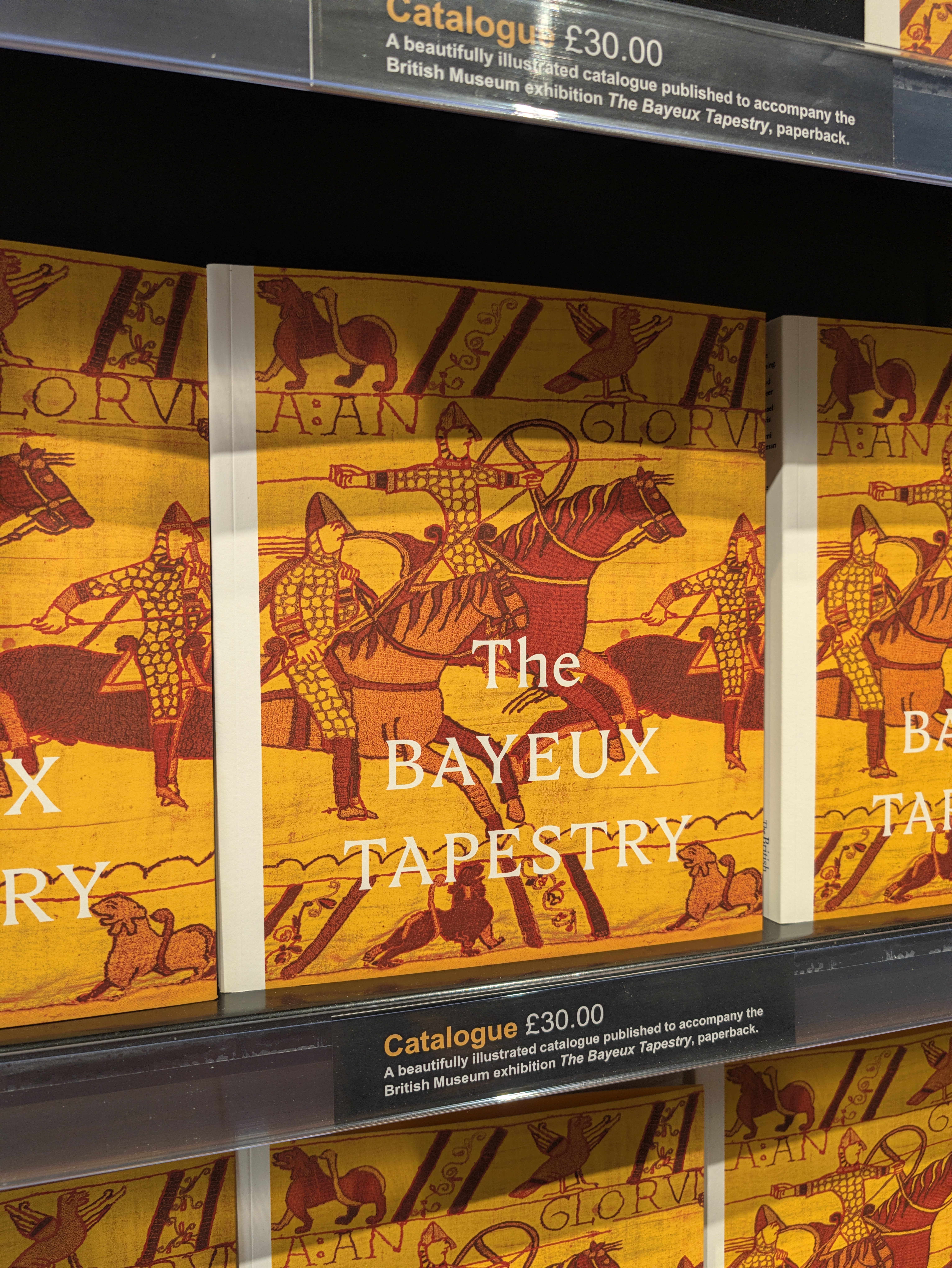
There is not an audio guide – and I’d guess it’s because it might slow the line down. Ordinarily audio guides at special exhibitions will spend a couple of minutes or more talking about specific paintings, and if that were to happen at key points in the tapestry’s story, it would cause the queue to back-up.
I hear that the audio guide really made the experience much better in Bayeux itself. A new museum in France is currently being constructed and is due to open sometime in the latter part of 2027.
In the meantime, if you manage to get tickets in one of the next releases of tickets, I do recommend picking an early slot like I did. There’s less chance of being subject to delays caused by earlier visitors going through slowly, and getting into the museum early is quite comfortable.
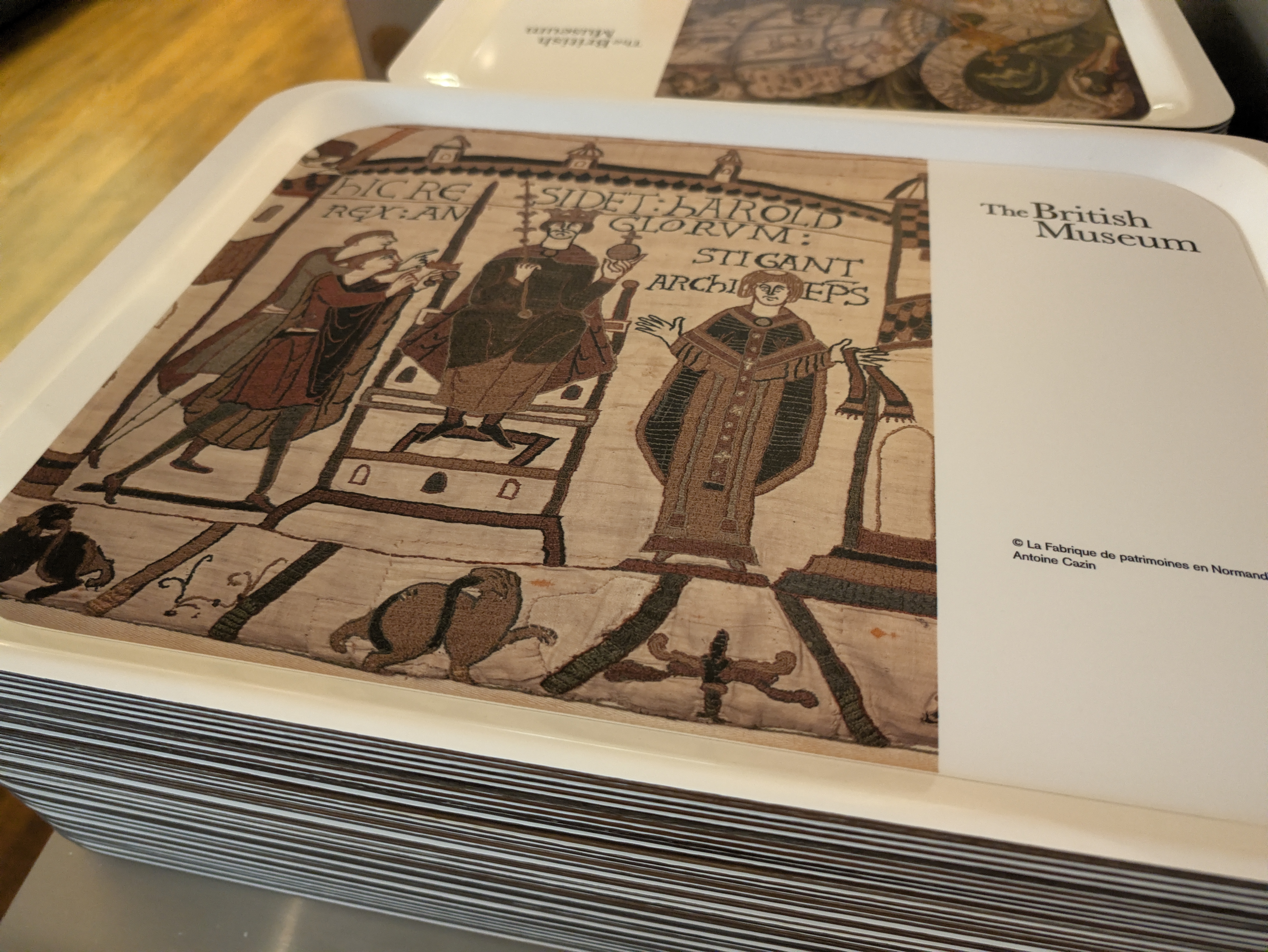
Incidentally, if like me, you are a British Museum member, then the museum has just opened a new Member’s Space very close to the Montague Street entrance. Inside they have a good food and drink offering, although it was certainly one of the more expensive black Earl Grey teas that I’ve had in London. Entertainingly, even the trays are now Bayeux Tapestry themed.
Leave a Reply